The names we don't ask
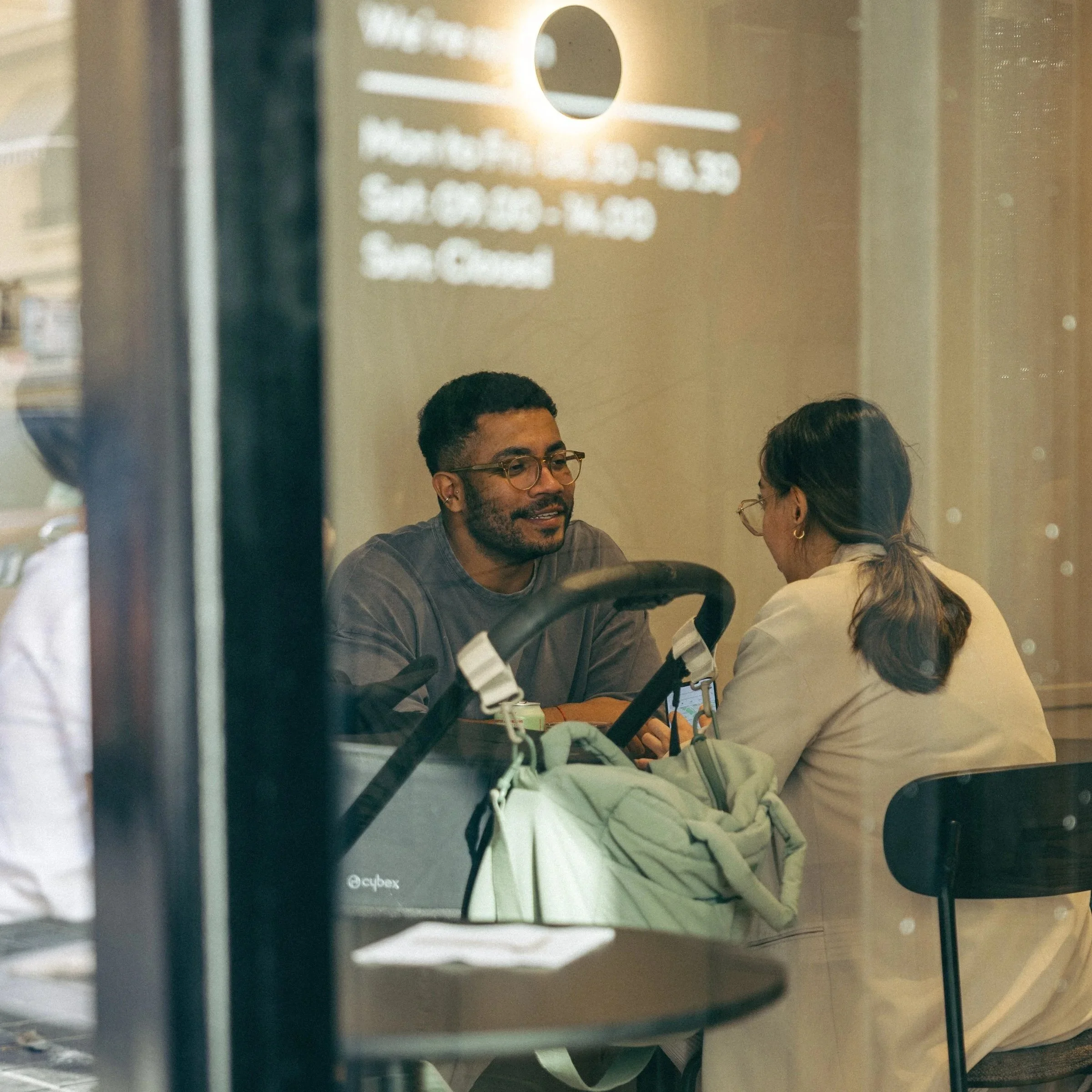
Sometimes one of us steps behind the bar and says, quietly: cold brew is here. And the other one knows exactly who just walked in.
It isn't a secret code. It wasn't planned. It's just what happens when you work in a small café for a few months. People come back. And because they come back, they leave a trace. And because they leave a trace, we start calling them by what they order.
—
Cold brew is named cold brew because in winter he orders a flat white and in summer he switches. The other way was confusing. Cold brew is easier.
Turmeric latte teaches yoga three streets away. Oat cortado works at the haberdashery on the corner. Large oat cappuccino with cinnamon is a Ukrainian couple who always come in with their little daughter, talking to each other in a very low voice. Yogurt bowl with light granola opened a new place in the neighborhood a few months ago and stops by every morning before opening her own.
8:40 cappuccino is a mother who comes in after dropping her son at school. Her bag half open, the coffee to-go, always saying thank you twice. We don't know her name. We know the exact time she walks in and the exact time she walks out.
—
Then there's the barista. She comes in on Saturdays, early, before her shift at another café in Valencia. She orders a flat white. We know which café she works at. We know how many hours she does on Saturdays. We know she lives in the neighborhood. We know what she has when she stays a little longer. We know almost everything about her.
Her name, no.
It's the sentence that describes this best: sometimes you know almost everything about someone, except for the one thing you ask when you first meet.
—
There are customers we eventually ask, almost without meaning to, after months.
Açai, who used to order an açai bowl with flat white every morning, told us one day that his name was Alejandro. But the nickname had already taken hold. Now he's Alejandro when we talk to him, and Açai when we talk about him between us. It's hard to undo a name that already works.
Latte with cinnamon and a croissant is Domingo. That one we know. Domingo comes in almost every morning and always says hello first. Sometimes he comes with his wife. And when their daughter visits them in Valencia, he stops by here first to pick up a matcha to take to her, the way you'd bring something from your own home. There are people who walk into a place and the day settles a little better around their arrival. Domingo is one of those. He also happens to have a nice name to start the morning with.
And then there's Lemon Curd. Lemon Curd is a customer who, for months, came in every day to buy the lemon curd we used to make. One day we stopped making it. Lemon Curd kept coming. He orders other things now, comes in with his dog, sometimes with his wife, and the name stuck. The pastry didn't, but the name did. There's something nice about that. A nickname that carries the trace of something that no longer exists.
—
José is our neighbor from the place next door. Double espresso, 8:29. One of the few customers who had a name from day one, because he was the neighbor and that meant a proper introduction. José didn't have to be discovered.
The others did.
—
And then there's Jennifer.
Jennifer orders her cortado extra hot and her toast with the egg well done, no oil. She's been doing the same thing for months. We know how she likes her egg. In any other context that would be an odd kind of intimacy. Here it isn't. Here it's the way we take care of someone who comes in almost every day.
Jennifer doesn't always come alone. Sometimes she comes with her friends and stays the whole morning. And sometimes she comes with Jesús, her husband. Jesús is a friend of Domingo, by the way. Around here, most people end up knowing someone.
Jesús orders a cortado and stays at the bar for a while. He worked many years in a car dealership, and every now and then he tells us a story from that time — the kind of story you can't invent. A car that turned up at the workshop in improbable shape. A customer who kept coming back for the same thing. A coworker he hasn't forgotten. He tells them without dragging them out. He has the elegance of someone who has spent a lifetime talking with strangers.
One day Jesús told us something else. That when he gets home and Jennifer isn't there, there are two options. Either she's at El Corte Inglés shopping, or she's at NUWANDA. He said it laughing, but in saying it he let slip, without meaning to, that for Jennifer there are three important places in her day: home, a store, and this one.
That, said by a customer, might be the nicest thing anyone has said to us since we opened.
—
There's a kind of affection that doesn't need every box ticked. Cold brew can keep being cold brew. The 8:40 mother can keep being the 8:40 mother. We know what we need to know: what time they come in, what they order, how they like it. We know they come back.
And sometimes, without planning it, we discover that for someone, the other option after their own home is NUWANDA.
That sentence doesn't make sense in the early months. When a café is still a project, a mortgage, a spreadsheet. It makes sense much later. One ordinary day, someone says it in passing, laughing, and you start to realize that at some point, without noticing, what you had on your hands had stopped being a business.
It had quietly become something else.
Javier
NUWANDA, Valencia
The names we don't ask
