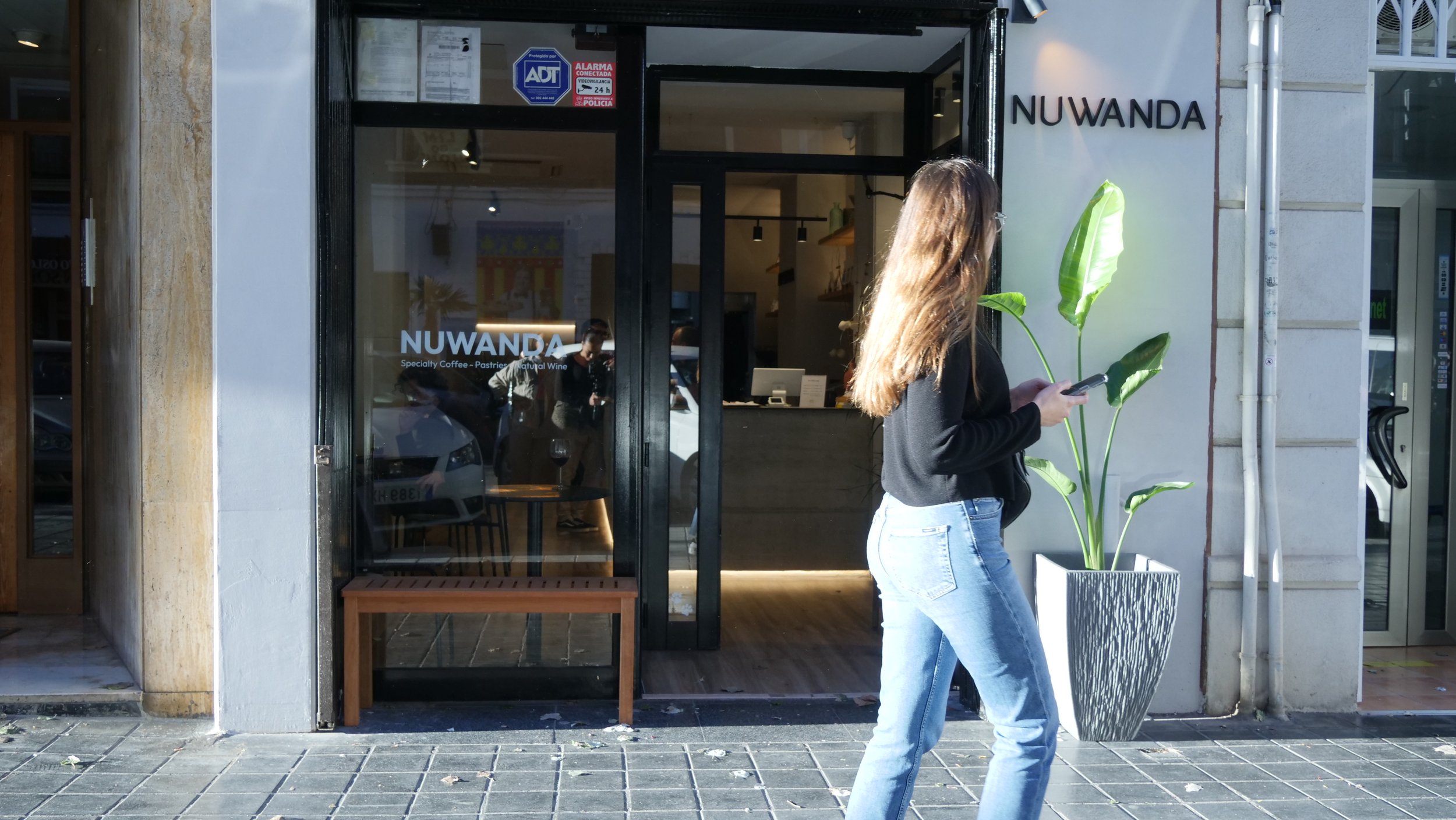
Abastos at nine
There's an hour in Valencia when the city hasn't quite decided yet what it's going to do with the day.
It happens between eight-thirty and nine-thirty. Shutters start going up. Someone drags a chair from inside a bar. A motorbike cuts across an empty street too fast. The sun is already up, but it hasn't settled into the certainty it will have by eleven.
Abastos, at this hour, looks very little like the Valencia on the postcards. No tourist groups. No full tables. No rush, yet. There are neighbors. People coming downstairs still half asleep. People walking into the corner bakery without saying much. Someone listening to a WhatsApp audio while waiting for a coffee.
—
At 8:29, José walks in.
José is our neighbor — he runs the place next door. He orders a double espresso and stays at the bar for a couple of minutes. Sometimes we talk about the weather. Sometimes we don't talk at all. Sometimes he just looks up, glances out at the street, and we both know everything's fine. Then he goes to open his place.
He's done this every single day since we opened.
There's a kind of loyalty that doesn't come from a points card. It just happens — because the schedules line up, because the coffee works, because the person behind the bar is alright with you. And because the place next door opens a little earlier than yours, and on a winter morning in Valencia, that counts too.
—
After José, the rest start to come in.
The guy who orders a batch brew and likes to switch the origin each time, and before he leaves he pays for his girlfriend's matcha, who'll come in a bit later. The woman who comes in asking if the rolls are out yet. The grinder starting up for the first time. The first conversations in English. Then in Italian. Then in Spanish again.
At this hour, the café isn't quite running as a business yet. It's running as a place. It's a small distinction, but we notice it almost every day.
—
We're a couple of blocks from the Mercado de Abastos — the market that gives the neighborhood its name. The Ángel Guimerá metro station is just around the corner, and you can walk to Plaza de España without quite noticing. Cyclists in a hurry pass our door, delivery riders we know by name, a mother walking her kid to school who already waves at us. The neighborhood works slowly, but it works. It has its own rhythms.
Abastos isn't Ruzafa. And for anyone who knows Valencia, that means something. There are bakeries here that have been open for thirty years. Neighbors who run into each other on the street and stop to talk for two minutes. Shops whose sign hasn't changed since the nineties. And, in the middle of all that, a few newer places — ours, a couple of others — trying not to break the balance too much.
—
Three years ago, when we arrived from Buenos Aires, we knew almost nothing about this neighborhood. We chose it a little by ear. Because of a space that happened to be available, because of a street we liked walking down, because of a hunch — hard to explain — that something could happen here.
I still think we chose well, every time I see José walk in at 8:29.
Most important things start that way. Without quite knowing. By instinct, by chance, because the street had the right light that morning.
—
By nine-thirty the café is full. The first brunch customers come in. Conversations get louder. Szabi starts on the second round of V60s. The day, finally, has decided to begin.
But the hour we like best has just passed.
Javier
NUWANDA, Valencia